


This simple recipe for buttermilk scones is the first step in making practically all of the scone dough I use. It’s like an easy recipe with a lot of variations, because you’ll get a lot of ideas for making scones!
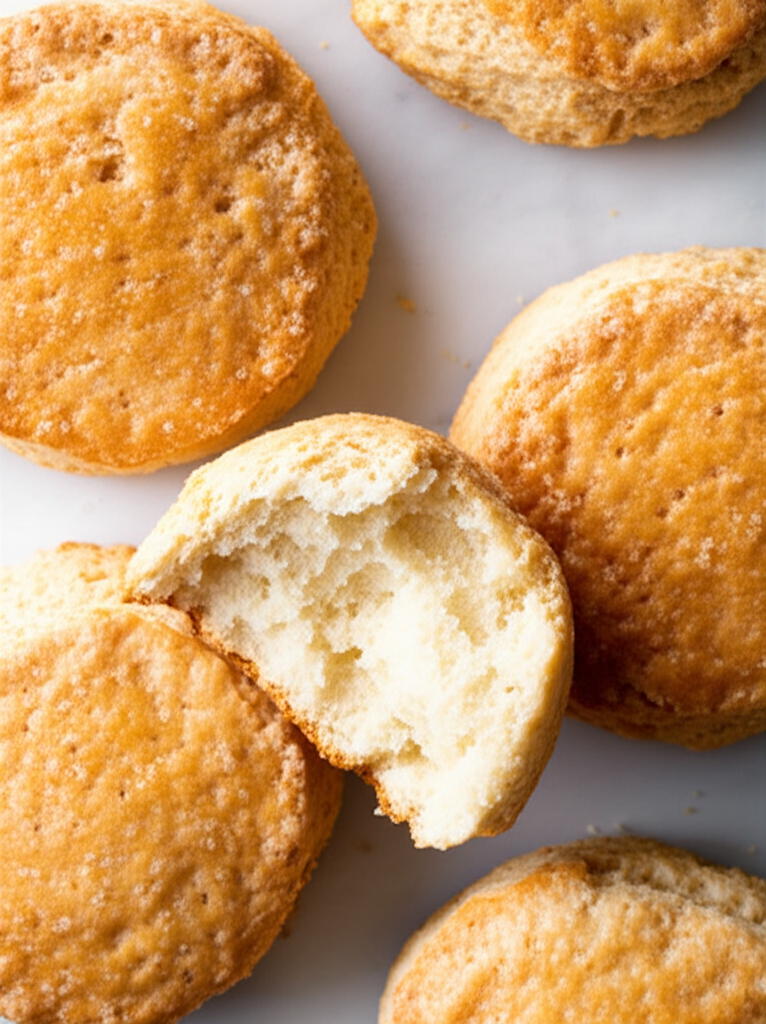
The best scone recipe provides flaky scones that are quick to make and great for tea or coffee in the morning or afternoon. These are just what you need, and I’ll have you making soft scones just like mine in no time.
Let’s go into the art of making British-style scones that are golden brown, including my favorite types and finest tips.
What makes scones and biscuits different
Before we start with the recipe, let’s make sure we know the difference between British scones and American biscuits. They are similar in some ways, yet they also have notable differences:
- Both should be soft, although scones are a little drier and crumblier than biscuits, which are more flaky and buttery.
- Scones can be sweet or savory, and they are commonly prepared with fruits, nuts, spices, vegetables, or cheese. Most of the time, biscuits are savory.
- Scones are traditionally a snack with tea in the morning or afternoon. People generally eat biscuits with their main meals.
What you need to make buttermilk scones
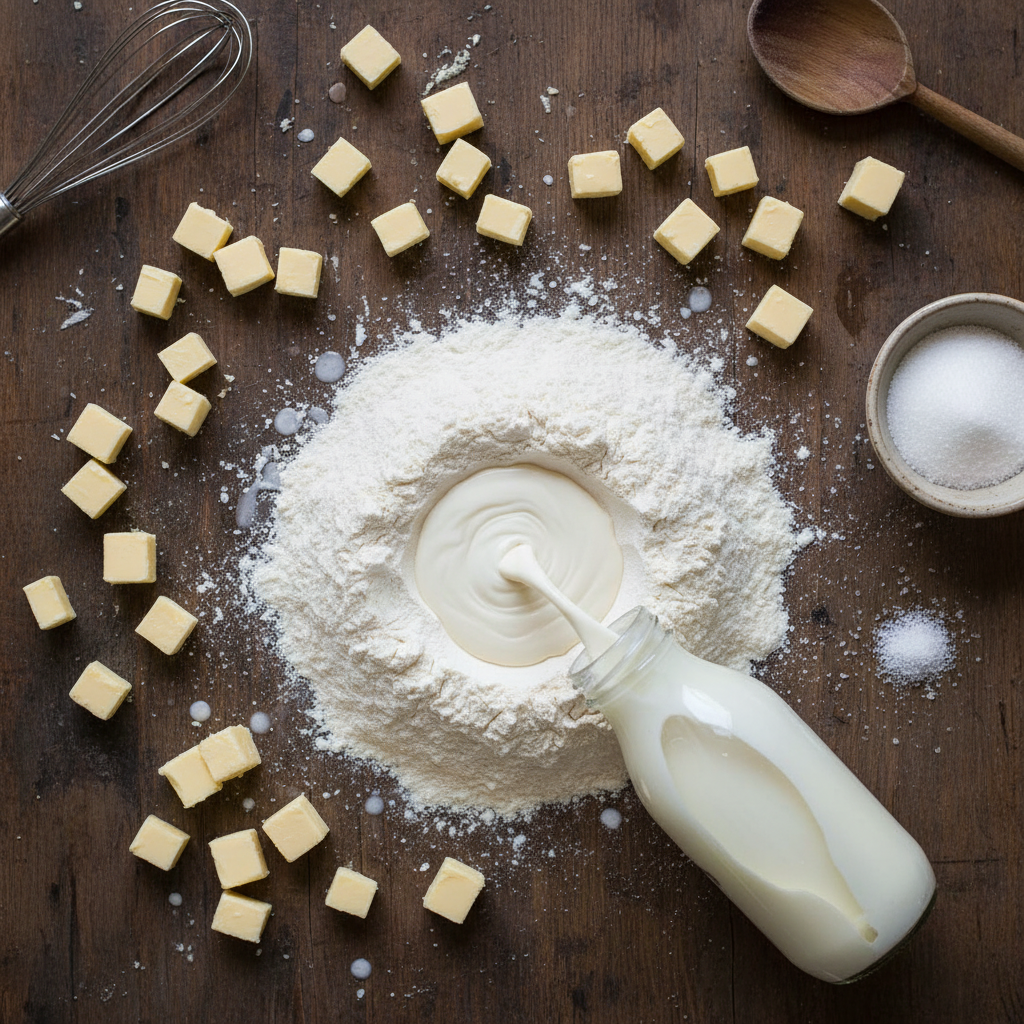
You can make my buttermilk scones recipe with things you probably already have in your kitchen.
You will need flour, salt, sugar, and butter for the dry ingredients. A little extra flour is also useful for dusting your counter.
For wet ingredients, all you need is buttermilk. Don’t worry if you can’t wait for your scones and don’t have buttermilk. Adding a little lemon juice to whole milk is a good replacement. Keep in mind that you might need a little more buttermilk to make the dough just right.
You don’t need any special tools to bake great scones, but there are a few things that can help:
- If you want neat round scones, you need a good round cookie cutter. If you don’t have one, you can use a drinking glass with a narrow lip or just cut the scones into squares or triangles using a sharp knife.
- If you don’t want to rub the butter into the flour yourself, a pastry blender can help. I use one like this, however I use it more for making a lot of pastry than for making scones, which don’t need as much butter.
- Some people say that a rolling pin is the best way to flatten dough properly, but you don’t need one. Your hands are the best tools for flattening and shaping dough. Plus, they’re free and you’ll be washing them anyway! Why dirty another tool if you don’t have to?
How to make the greatest scones
Flour
In Australia, it’s easy to find self-raising flour in the grocery store. It creates great scones and uses less ingredients. If you can’t get self-raising flour, you can use all-purpose flour mixed with 3 teaspoons of baking powder. It’s not a perfect replacement, but it will work. Sometimes I’ve made scones using half whole wheat flour, and it works, but you’ll need to add more liquid to the dough.
Butter
I always use unsalted butter when I bake because it lets you decide how salty the whole meal is. The butter needs to be soft enough to rub into the flour, but not too soft. The ideal texture comes from butter that is as cold as possible. You don’t want the butter to be so soft that it melts and mixes in. Instead, it should be at room temperature so that it rubs in and makes coarse crumbs. I take my butter out of the fridge and cut it into cubes approximately 15 minutes before I want to mix the dough.
Buttermilk
The scones are incredibly soft and have a little bit of tang from the cold buttermilk. If you really want scones but don’t have buttermilk, combine ordinary milk with a teaspoon of white vinegar or lemon juice. Let the mixture sit for 5 minutes so that it thickens and curdles a little bit before you use it.
Combining
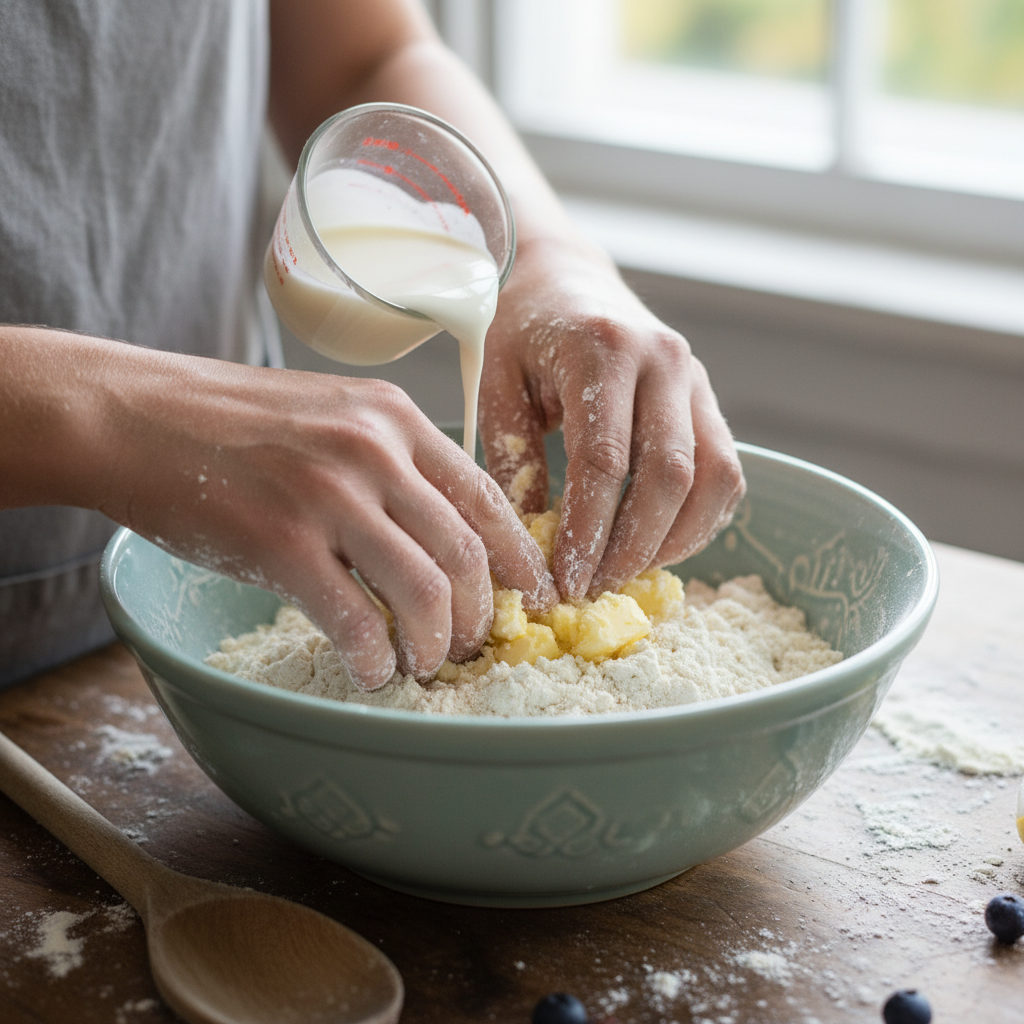
A big basin is best for scones because it allows you plenty of area to massage in the butter and combine the dough. When you add the buttermilk to the flour mixture, stir it until it’s just incorporated. Instead of the softest scones with the right crumbly texture, overmixing makes them rough.
A surface with a little flour on it
When you shape the dough, make sure to lightly flour your hands and the area you’re working on. Don’t go too far! You only need enough flour to keep the dough from sticking. If you add more, your scones will have thick, cakey chunks of flour on them as they bake, which is not good to eat.
Cutting and shaping
Gently pat the dough into a circle or rectangle form, and then use a round cookie cutter to cut each scone straight down without moving it around. “Just a light touch,” as my Nanna would say! Gentle shaping and clean cuts make scones that are of the same size, look nice, rise more uniformly, and have a superior crumb.
Advice for baking
Put parchment paper on a baking pan and bake the scones close together on it. Before they go in the oven, they should be virtually touching. When they bake, they will grow and “kiss” at the edges.
Some people recommend to use egg wash, but since you already have the buttermilk out, why not use that? Then put that baking tray in the oven as soon as you can. As soon as the buttermilk mixture touches the dry ingredients, the dough starts to rise. So, for the best rise and flakiest scones, cut them, glaze them, and put them in the oven as soon as possible.
The best way to cook buttermilk scones evenly is to put them in the middle of the oven.
The Best Recipe for Buttermilk Scones
This is a simple buttermilk scone recipe that yields scones that are very flaky and can be changed to fit a wide range of tastes.
- ○ flour
- ○ salt
- ○ sugar
- ○ butter
- ○ 1 1/2 cups buttermilk
- ○ 2 Tbsp buttermilk
- Get the oven hot
For a regular oven, set the temperature to 450°F/220°C.
Set your steam oven on Combi Steam, 400°F/200°C, and 30% humidity. If your steam oven doesn’t have variable humidity, don’t panic! Set the oven to combi steam at the right temperature, and it will take care of the steam for you. Put parchment paper on a baking pan and set it aside. - Make the dough for the scones.
Put the sugar, salt, and flour in a big bowl for mixing. Put in the butter. Use your fingers or a pastry blender to work the butter into the flour until the mixture looks like coarse, lumpy breadcrumbs.
Add the buttermilk to the flour mix by making a well in the middle. Use a butter knife to mix and chop the ingredients together until they create a rough dough that almost sticks together. Don’t mix too much. You can add a little extra buttermilk if it looks too dry, but don’t go overboard! You don’t want muffin batter; you want dough that is wet.
Put the dough on a surface that has been lightly floured and use your hands to gently bring it together until it forms a single mass. Press it into a rectangle that is 1 1/2 inches (4 cm) thick. - Cut and bake the scones.
Cut the scones with a 2-inch/5cm round cookie cutter. To keep the dough from sticking, dab the cutter in flour between cuts. Press the leftover dough pieces together lightly and cut them into 12 scones.
Put the scones on the preheated baking sheet so that they are virtually touching. Brush the tops with more buttermilk and bake until light golden brown and puffed, about 15 minutes. If they’re done, they’ll sound hollow when tapped on top. - Wrap, cool and serve scones
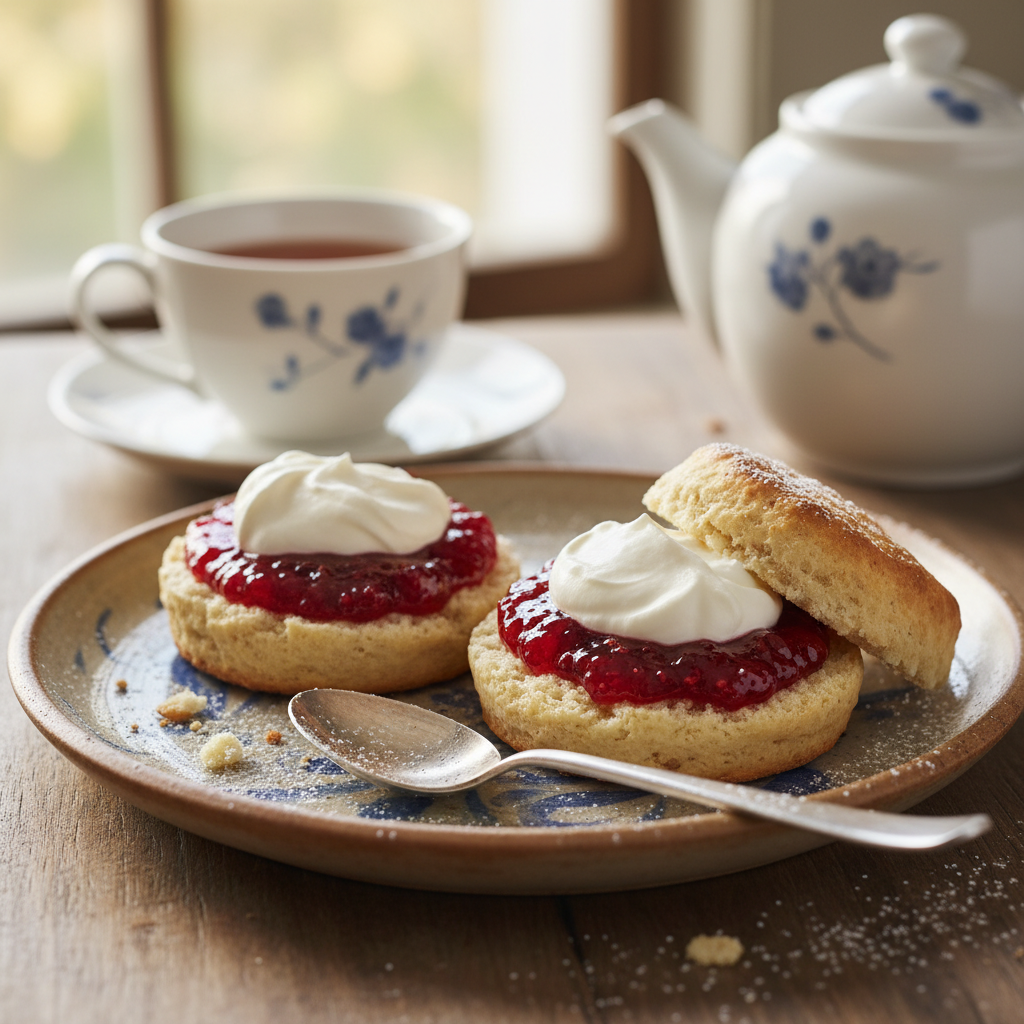
As soon as you remove the scones from the oven, cover them with a clean hand towel. This helps them stay soft and sensitive when chilled. Allow to cool until they’re warm, then split and serve with jam and whipped cream.
Notes
Flour: In Australia we may quickly get self-raising flour at the grocery. If that’s not the case where you are, you can substitute all-purpose flour mixed with 3 teaspoons baking powder. It’s not an exact substitute but it will do great here.
Butter: The softness of the butter is essential in this recipe; it needs to be just soft enough that you can rub it into the flour, but not so soft that it melts and blends in. I remove it from the fridge and cube it approximately 15 minutes before I’m ready to use it, and that works perfectly.
Buttermilk: cultured buttermilk makes the scones very soft and gives them a faint tang. If you’re desperate for scones but have no buttermilk, mix ordinary milk with 1-2 teaspoons lemon juice or white vinegar and let the liquid sit for 5 minutes to curdle and thicken slightly.
Different ways to make scones
You can prepare scones in so many different ways. From almonds to chocolate, berries to bananas, pumpkins to tomatoes. A good basic scone recipe is like a muffin in that you can add a lot of different things to make them your own.
Here are a few different kinds of scones that I make a lot.
- Blueberry Buttermilk Scones: add a cup of whole, fresh blueberries to the scone dough when you turn it onto the bench to bring together. Gently fold and smash them into the dough then proceed with cutting and baking. These are excellent with a fast glaze made from powdered sugar and fresh lemon juice.
- Chocolate Chip Scones: add a cup of chocolate chips to the bowl soon after the buttermilk and follow with the rest of the recipe.
- Date Scones: add 1/2 tsp cinnamon and 1/4 tsp nutmeg to the flour at the start of the recipe. After the buttermilk, add 8 to 10 chopped and pitted dates to the bowl. Then, follow the rest of the procedure.
- If you want to make lemon scones, go right to my recipe for them, which is based on this one!
- For Cheese and Herb Buttermilk Scones, leave off the sugar and add 1/2 teaspoon more salt. After rubbing the butter into the flour, add 2/3 cup of shredded cheddar cheese and 2–3 tablespoons of finely chopped fresh herbs to the bowl. Then, follow the rest of the instructions. I like thyme, rosemary, and parsley as a good mix of herbs.
Go ahead and make the finest scones you’ve ever made! I can’t wait for you to try this easy recipe. If you do, please let me know in the comments below. I’d love to hear about it if you try one of the many buttermilk scone recipes.
Have fun baking, and we’ll see you again soon.
Have you tried this recipe and liked it? It would be great if you could score and review it using the stars on the recipe card and leave a comment below. Ratings and reviews help other people find my recipes and understand them from their point of view.